NAME |
YEAR |
PLACE |
ITER |
Affreschi della Farnesina |
dal 1511 |
Via della Lungara |
5 |
Cappella Borgherini |
1516-1524 |
S.Pietro in Montorio - Gianicolo |
5 |
Ritratto di Andrea Doria |
1526 |
Galleria Doria Pamphillj |
1 e 7 |
Natività della Vergine (completata da Salviati) |
- |
S. Maria del Popolo (Piazza del Popolo) |
7 |
Cristo che porta la croce e Madonna |
- |
Galleria Borghese |
7 |
Opere attribuite a Sebastiano |
- |
- |
- |
Ritratto di guerriero |
- |
Galleria Colonna |
5 |
Ritratto di Andrea Doria come Nettuno |
- |
Galleria Doria Pamphillj |
1 e 7 |
Ritratto di giovane con teschio |
- |
Galleria Doria Pamphillj |
1 e 7 |
Busto di Cerere |
- |
Museo di Palazzo Venezia |
1 |
Doppio ritratto |
- |
Museo di Palazzo Venezia |
1 |
Sala di Costantino |
- |
Palazzi Vaticani |
9 |
San Bernardo |
- |
Pinacoteca Vaticana |
9 |
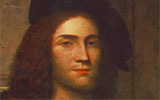
Name by which the Italian painter Sebastiano Luciani is known (Venice around 1485 - Rome 1547). He was Giovanni Bellini's pupil, but the first works certainly done by him (around 1508-1509) in Venice (altarpiece with Giovanni Crisostomo and Santi in the church by that same name; four organ shutters with Saints in S. Bartolomeo) reveal Giorgione's influence, although from the beginning the use of color in Sebastiano 's art functions more as a volume constructor, contributing to give solemnity and monumental sense to the figures in space. Called by Agostino Chigi to Rome (1511) to decorate the Farnesina, he painted in this villa the frescoes with Polifemo and some scenes of the Metamorfosi . Sebastiano 's presence in Rome was one of the determining facts in the development of Italian painting in the sixteenth century, since it represented the mediation between the experiences of the Venetian chromaticity on one hand, and the Tuscan-Roman plasticity on the other. If indeed Sebastiano drew from the Roman sojourn the taste for rhythmic sense learned from Raffaello, this one in turn learned from the Venetian painter the sense of color that brings such a newness, in his production, to the frescoes of Eliodoro's Room in the Vatican. A few masterpieces were the fruit of this fecund exchange of experience in Sebastiano 's work: the Morte di Adone (Uffizi), with its sensuous figures rhythmically grouped against the backdrop of a view of Venice and with it's richness of color, confirms precisely the fusion of Venetian elements with contributions from the Roman and, more precisely, Raffaello's style; an equal harmonious vision, rich of grace and balance, at times veiled by a soft pathetic intonation, is expressed in that year's gorgeous portraits (the so-called Fornarina in the Uffizi; Berlin's Dorotea ; portraits of cardinals Ferry Carondelet and Ciocchi del Monte). A little later, Sebastiano 's friendship for Raffaello was transformed in envy and hate, and Michelangelo's ascendancy took the place of the influence of the artist from Urbino. An eloquent example of this phase of Sebastiano 's art are the two sculptural figures of the Pietà in Viterbo, tragic and monumental in the ample spaces in which they are placed, the Madonna vertically, and the great nude Christ horizontally, with the wonderful and dramatic backdrop of the Venetian landscape. Other works date back to those same years, namely, the decoration of Villa Bagherini, the Resurrezione di Lazzaro (London), the Flagellazione (Rome) and the splendid portrayals of Andrea Doria (Rome) and Clemente VII (Naples). Forced to flee from Rome because of the impending sack of the city (1527), he worked in Orvieto, Mantova and Venice. Once he returned to Rome in 1531, he obtained from the Pontifical Chancellery the title of guardian of the “ piombo ”, the lead seal used to authenticate the papal bulls, and from this very circumstance he earned the nickname by which he was known from then on. The third phase of his activity was not as fruitful or as happy as the previous ones. Although there's no lack of works of notable value ( Natività della Vergine, Rome; Discesa al Limbo , Madrid), one can notice a certain difficulty to achieve the synthesis that confer such quality to the production prior to 1527. The influences that affected Sebastiano undoubtedly enriched his personality, but did not alter his strong character that remained ever original; the interpretation given by him to Venetian chromaticity, instead, contributed to the development of mannerist sensitivity, so much that many of the painters of the Counterreformation looked up to him as a teacher.