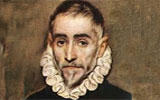
Italian architect (Capolago 1556 - Rome 1629). Arriving in Rome as a plasterer, he acquired his formation as an architect in the school of Domenico and Giovanni Fontana. He completed many other works by other artists ( Palazzo Chigi; prospect of S. Giovanni degli Incurabili; S. Giovanni dei Fiorentini ; etc.); on his own, instead, he built the church of S. Susanna (1597-1603), palazzo Mattei (1606-16) and St. Peter's lengthening and façade (1607-14). In S. Susanna's project, although standing by the peculiar schemes of the second half of the sixteenth century, Maderno impressed movement and light-and-shade effects on the mural masses, thereby anticipating the Baroque; he worked in a similar manner in Palazzo Mattei, specially in the grand staircase and in the courtyard. But his major work is the completion of St. Peter through the addition of two spans anterior to the central core; this lengthening, imposed by the requirements of the church service, modified Michelangelo's original project of the basilica, shaped as a Greek cross, shaping the plant in the more traditional form of the Latin cross; thus the cupola's grandiose effect was destroyed and the harmonious centrality of the basilica, as Michelangelo had conceived it, came to nothing. In the building of the façade Maderno reprised Michelangelo's project of the great pronaos in a single gigantic order; yet he modified it closing the intercolumns in a way that the façade could contain the hall and the loggia of blessings. Aware of the excessive wideness of the façade (115 meters) as compared to its height (45,50 meters), Maderno would have wanted to flank it with two campanili that would have made it slimmer; yet he had to give up on the project because the portico's foundations would not have endured the additional weight. Once St. Peter was finished, Maderno worked in the Quirinal's Palace, built S. Andrea della Valle's cupola (1622) and begun (1624) palazzo Barberini. Specially during the papacy of Paolo V, Maderno was the main architect at work in Rome; although he never denied his mannerists origins, he contributed notably to prepare the way for the coming of the Baroque .